
Searching Lumpkin County Criminal Dockets
The county's Clerk of Superior Court page sends Superior criminal access to PeachCourt. Georgia Courts names PeachCourt as the mandatory e-filing provider for Lumpkin Superior Court, too. One caution applies here. The Georgia E-Access page is a provider directory rather than a single statewide search database. Whenever you can, begin with the exact case number. Pull it from a summons, accusation, indictment, order, or filed paper.
- Confirm the matter belongs to Superior Court rather than Magistrate, Probate, Juvenile, municipal, appellate, or federal court.
- Open PeachCourt, select Lumpkin County and the correct court, and search by exact case number or the published party-name method.
- Match the court, parties, assigned judge, dates, and status before opening the case-information page.
- Read calendar events, docket proceedings, charges, disposition fields, and available documents as separate parts of the record.
- Use PeachCourt's Missing Cases form or call the Clerk at 706-864-3736 if a known case does not appear.
Lumpkin publishes no standard criminal case-number format. Copy the number exactly as the court issued it, and never add a guessed prefix. A name match is only a lead. It stays that way until the case details line up.
Lumpkin Criminal Search Through PeachCourt
PeachCourt wears two hats in Lumpkin County. It handles e-filing for attorneys, and it separately offers public case lookup. Those are different services, so don't assume one login covers both. For criminal cases, its help material lists what a search can return: assigned judge, case status, co-defendants, the prosecuting and defense attorneys, charges, disposition and date, calendar events, docket proceedings, and case documents. Coverage and images differ from court to court. Some fields may not appear for every case. The PeachCourt criminal help center lays out which courts the provider covers and how its criminal docket workflow runs.
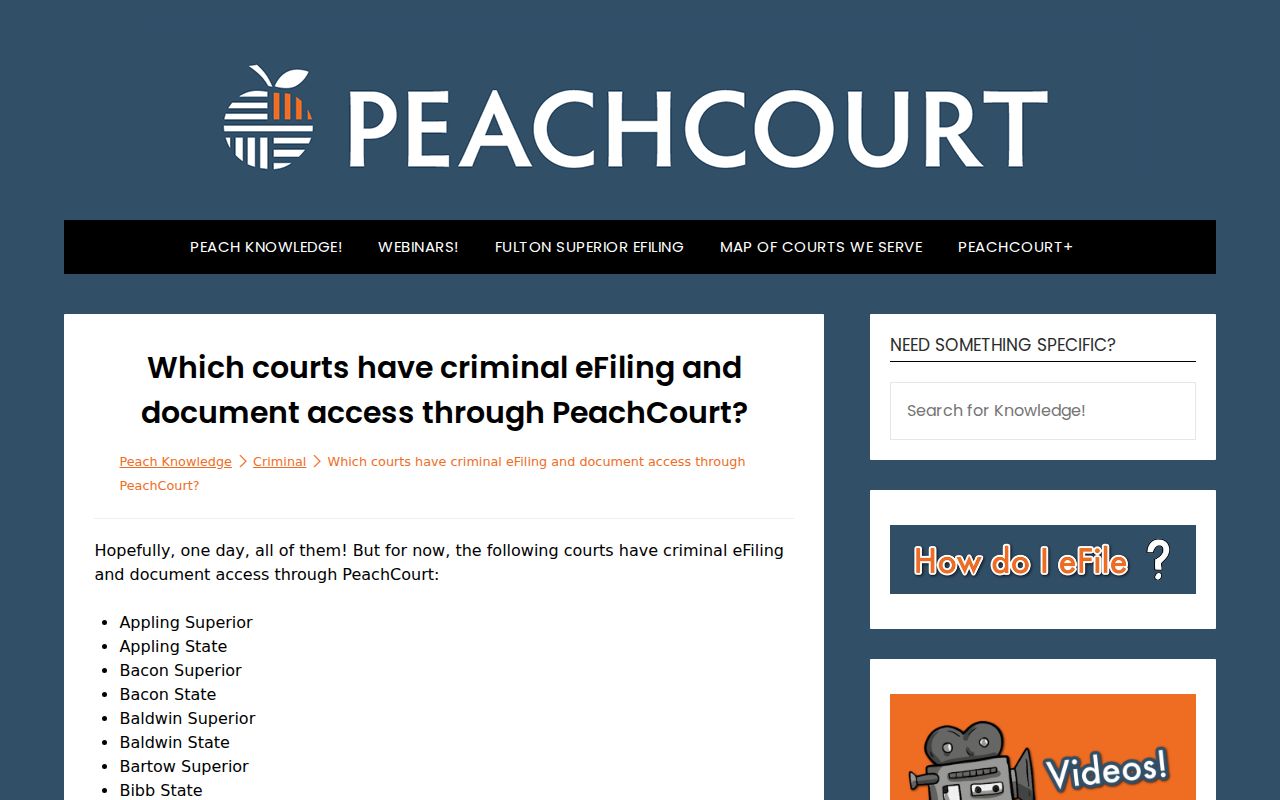
Why does the court and county selection matter so much? Pick the wrong one, and a Lumpkin County criminal docket result can mislead you.
target_note
target_note
Inside a Lumpkin County Criminal Docket
A Lumpkin County criminal docket groups case identity, parties and counsel, scheduled events, proceedings, and outcomes in one sheet. Georgia Superior Court docket-sheet instructions spell out more fields than a public screen may show.
| Case number | The court-assigned identifier, copied exactly because no Lumpkin format was published. |
|---|---|
| Charge or count | An allegation listed by count, not a conviction or final outcome. |
| Judge and counsel | The assigned judge plus prosecuting, defense, or co-defendant information supplied by the court. |
| Calendar event | A scheduled arraignment, motion, trial, or other event checked against the current notice. |
| Docket proceeding | A chronological activity line that may exist without a public document image. |
| Disposition and sentence | The recorded outcome and date, followed separately by sentencing terms when entered. |
A file-stamped date is not a hearing date. A calendar entry is not proof the event occurred, and a visible document is not automatically a certified copy.
Charges and Lumpkin Criminal Dispositions
Every Lumpkin County criminal docket entry splits into two parts: what was alleged and what the court decided. The charging document itself comes as an indictment or an accusation. A plea can read guilty, not guilty, nolo, or some other official wording. Dismissal and nolle prosequi each mean something different from a guilty or not guilty verdict. Read the entry in context.
- Disposition date
- The date the court entered the outcome, not necessarily the arrest, filing, plea, or sentencing date.
- Sentence
- The court-recorded consequences and conditions, which may appear after the disposition.
- Closed or disposed
- A status label that should be read with the final docket entries and filed order.
When accuracy truly matters, check the summary against the actual order and ask the clerk for a certified record. A portal summary helps, but it is not the full file.
How a Lumpkin Criminal Case Moves
A Lumpkin County Superior Court criminal docket usually opens with an indictment or accusation. From there, entries pile up through arraignment, pleas, motions, hearings, trial, disposition, and sentencing. Not every case hits every stage, and a single motion or hearing entry does not decide the whole case.
Docket flow: Charging Instrument › Arraignment › Pretrial Proceedings › Plea or Trial › Disposition › Sentencing
Later docket entries might show a motion for new trial, a transcript filing, a notice of appeal, a remittitur, or a sentence review. Once a notice of appeal shows up, the case continues elsewhere. You would search it through the docket tools of the Court of Appeals of Georgia or the Supreme Court of Georgia.
Lumpkin Criminal Calendar Events and Proceedings
PeachCourt splits two kinds of information apart. A calendar event is a scheduled item the court supplies. A docket proceeding, by contrast, is a chronological record of case activity. Lumpkin County's civic Main Calendar is neither one. It is not a judge-by-judge database of criminal settings.
If a date looks wrong: compare it with the current summons or notice, then call the Clerk or recorded court-information line at 706-482-2401 before travel.
Dates move. Resets, continuances, emergency orders, and revised special-set weeks can all push a hearing to a new day. The 2026 staffing material lists three regular Superior judges, help from two senior judges, criminal calendar calls, plea and motions dates, and schedules that keep requiring revision.
Enotah Criminal Workload and Lumpkin Dockets
Lumpkin County sits in the four-county Enotah Judicial Circuit alongside Towns, Union, and White counties. That structure matters when you read court administration figures. The 2025 Georgia Judicial Workload Assessment reports three judges. It lists an average of 1,377 cases per judge, a workload value of 2.9, and a judicial-need measure of 0.95 for the circuit. Its three-year criminal average lists 2,121 defendants across Enotah. None of those values is a Lumpkin-only defendant or filing count, so they should not be used to estimate the volume of one county docket.
The local 2026 Clerk staffing document offers a different kind of context. It says the court schedule increased for 2025. Growth continued in response to a COVID-related backlog. Two senior judges now assist the three regular Superior judges. Each judge runs a separate schedule. Special-set jury weeks, criminal calendar calls, and plea or motions dates require constant revisions. Here is the practical lesson for anyone following a Lumpkin County criminal docket. Treat workload figures as system context. Treat the current court notice as the source for an appearance date.
Courts That Hold Criminal Dockets
Four courts split the criminal work in Lumpkin County. Superior Court, part of the Enotah Judicial Circuit, tries felonies and the widest range of criminal charges. The Clerk of Superior Court keeps those docket files. Magistrate Court takes warrants and a few limited matters; its criminal clerk answers at 706-864-7760. Probate Court covers misdemeanor traffic plus game and fish violations at 706-864-3847. Dahlonega Municipal Court, meanwhile, handles city traffic and ordinance cases through a clerk of its own.
Juvenile cases run on separate rules and separate staff. A federal criminal matter touching Lumpkin County never lands in PeachCourt. It lives in PACER. If filed locally, it sits in the Northern District of Georgia's Gainesville Division.
Lumpkin Criminal Records at the Clerk Counter
Going in person works too. The Clerk's counter sits at 325 Riley Road, Room 108, Dahlonega. Hours are weekdays 8 a.m. to 5 p.m. except holidays. A Public Access Terminal stands in the Clerk lobby, as the county Notices page describes. Be clear about what you want. A docket view, a file-stamped image, and a certified copy are three different requests.
Phone: 706-864-3736. The Clerk publishes no general mail, email, fax, drop-box, API, or subscription route for criminal records. Confirm before you send anything. Note that the county's general Georgia Open Records Act form excludes Clerk of Court requests.
At the counter, name the court, the exact case number, the docket or document you need, the filing date, and the copy type. Mention juvenile or adoption records up front, because those bring dedicated staff and access limits. The Public Access Terminal is described as free to use. Filing, service, off-site e-filing, document, and certification charges can still apply. No universal Superior Court copy fee or turnaround promise exists. Ask the Clerk for the current amount and delivery time rather than borrowing the Probate fee schedule.
Sealed Dockets and Public Access
A case can be public while its papers stay restricted. PeachCourt blocks sealed documents, adoption-related material, and proposed orders that were never executed. Juvenile files, protected identifiers, sensitive details, and court-sealed filings may be withheld, redacted, or routed to dedicated Clerk staff.
Georgia access rules: Uniform Superior Court Rule 21.6 addresses protected identifiers and sealed filings. Rules 36.16 and 36.17 address electronic filing and sensitive information. Electronic filing does not make every attachment unrestricted.
A blank where a name or image should be proves nothing. It may still hide a case. So ask. Options may include a public docket, a redacted copy, or an authorized-party process. Georgia Rule 22 keeps courtrooms open while honoring confidentiality rules.
State Criminal and Federal Docket Boundaries
Federal criminal dockets live in PACER, not PeachCourt. The official Gainesville Division page shows Lumpkin among the counties served and spells out the federal clerk's access rules for anyone pulling those records.
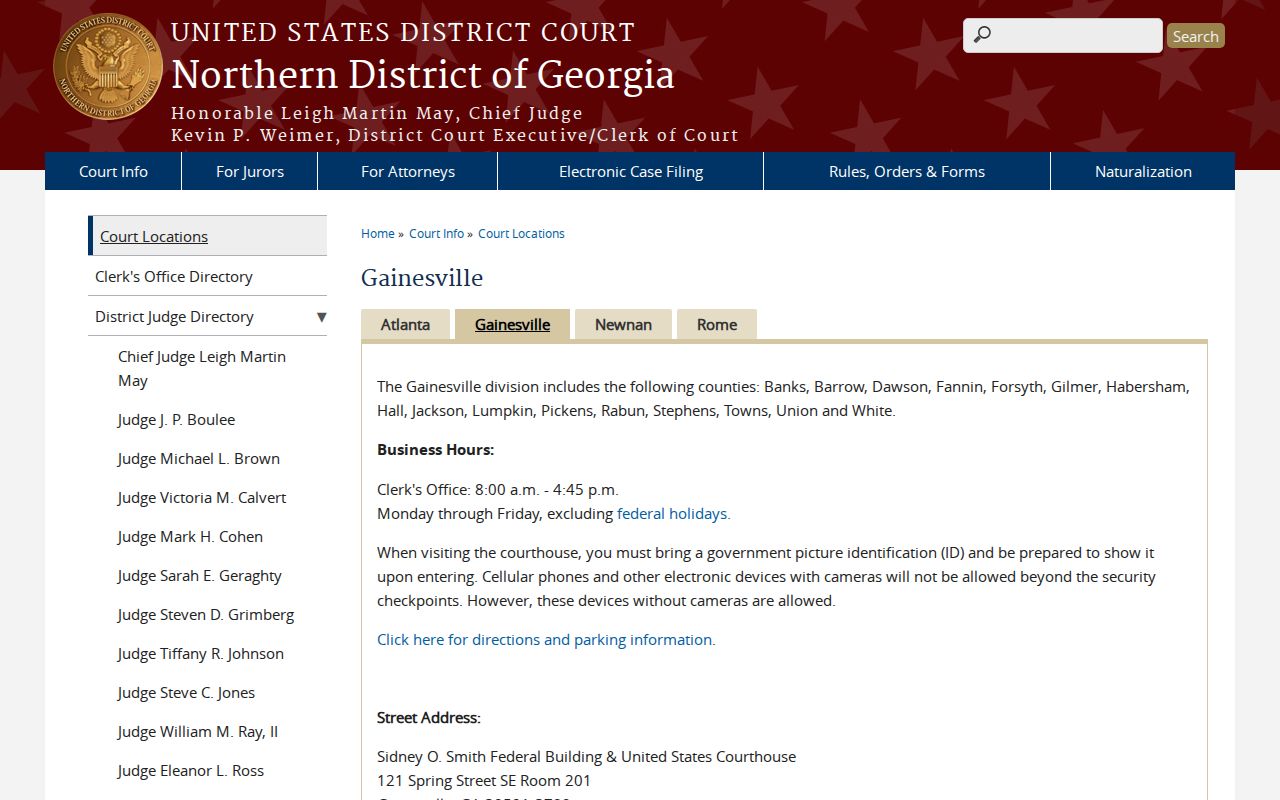
That division page draws a clean boundary. Lumpkin County Superior records stay with the local clerk and PeachCourt; federal dockets stay with the federal clerk and PACER.